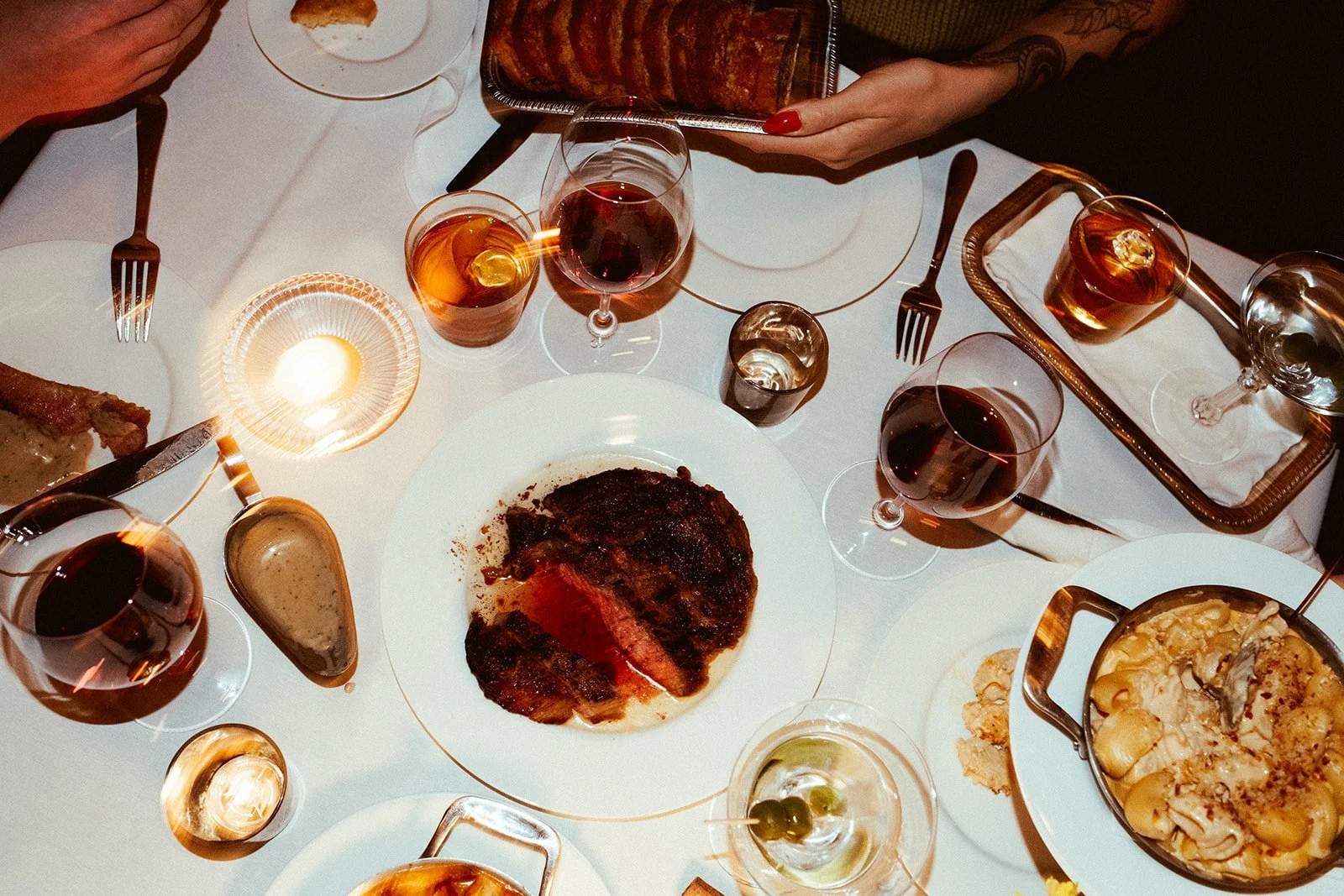
Bone in Ribeye with Sauce au Poivre
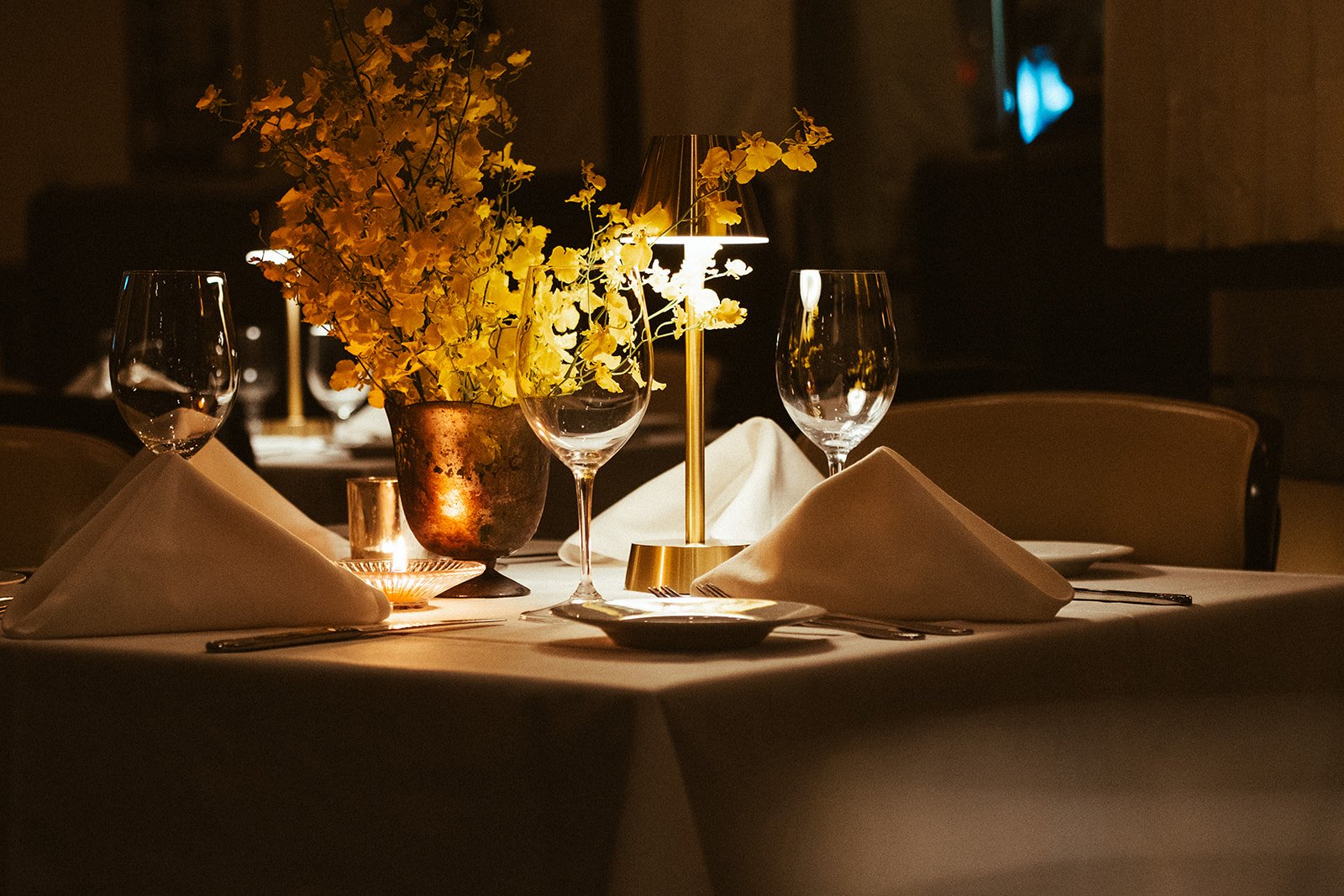
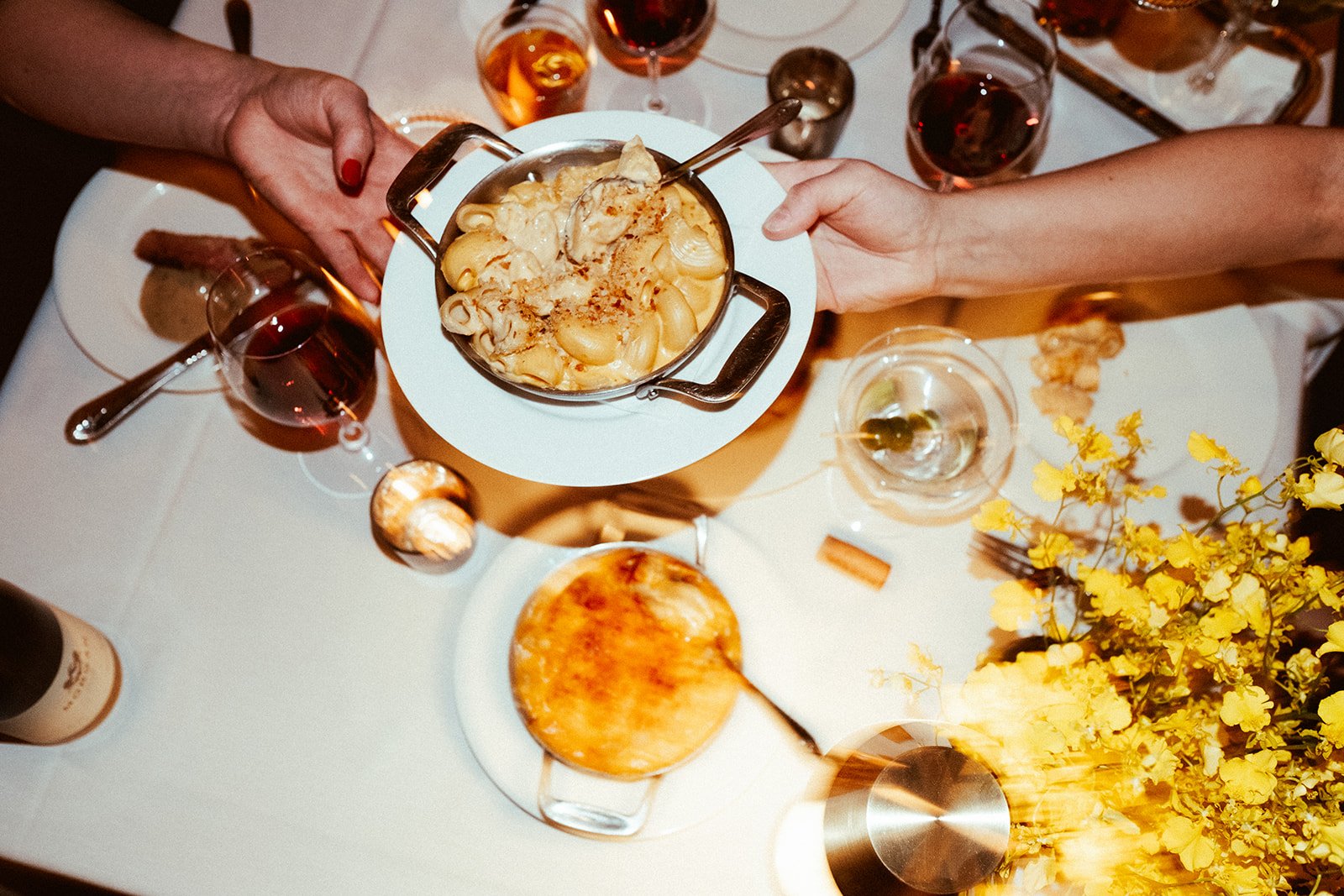
A bone-in ribeye is my favorite cut of beef to share at the table. Our dinner party version of a Murray’s steakhouse main course is an interval roasted ribeye, basted to finish, and served with sauce au poivre.
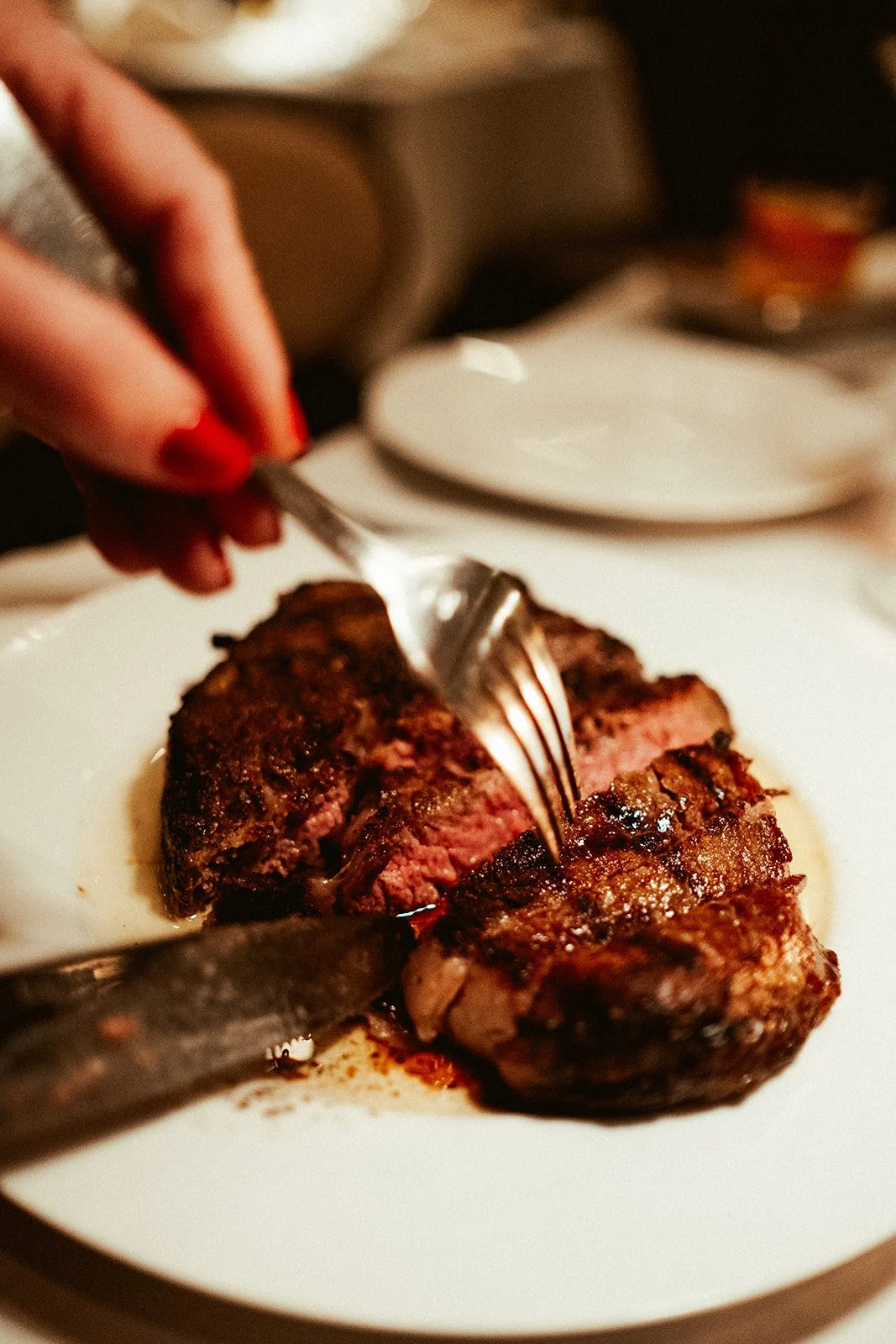
Interval Roasted Ribeye
serves 2-4
We recommend interval roasting the bone-in ribeye before searing and basting with butter, a technique used for thick cuts of meat.
Rather than roasting continuously, the steak moves in and out of the oven in intervals, resting for the same amount of time in between. This process is repeated until the steak is about 30-40ºF below your desired temperature so there’s still room to sear, baste, and rest. The result is a ribeye that’s evenly cooked, avoiding a grey band with an under-cooked center.
Shopping List —
1 bone-in ribeye, 1.5-2” thick
4-6 tbsp prepared brown butter, warmed
3 tbsp butter
1 small bunch thyme
1 garlic clove
finishing salt like Maldon or Fleur de Sel
Equipment —
butchers twine
sheet tray with a rack
pastry brush
meat thermometer
Steps —
Pull out the ribeye to room temperature at least an hour before cooking.
Preheat the oven to 375ºF or to 350ºF for a convection oven.
Loop butchers twine around the outside of the ribeye twice before tying a tight knot. Tying it helps cook the meat evenly, prevents the rib cap from separating away from the steak, and also helps the meat from curling.
Place the tied ribeye on a sheet tray with a rack. Season the steak heavily on both sides with salt and brush with brown butter.
Place the steak in the oven and set a timer for 10 minutes. After 10 minutes, remove from the oven, brush with brown butter and a light sprinkle of salt, and flip the steak over. Brush the top with brown butter and season with salt, and let the ribeye rest out of the oven for 10 minutes.
Repeat step 5 twice more.
After the last interval, when the ribeye has rested for the full ten minutes, begin preheating a cast-iron pan over high heat.
Add canola oil to the pan. Once it shimmers, place the ribeye into the pan, releasing it away from you. Allow to sear and the fat to caramelize, about 2-3 minutes. Flip the ribeye to sear the other side.
*I also like to sear the fat on the side of the ribeye.
Turn the heat down to medium-high, and add the butter to the pan. Once the butter begins to froth, add the thyme and garlic to infuse the butter. As the thyme pops, tilt the pan and begin basting the steak in the butter, continuously spooning the butter evenly over the meat, about 2-3 minutes. Flip the steak and repeat until the center reaches about 118ºF - 120ºF for medium rare.
Remove the ribeye from the pan, spoon the butter, garlic, and thyme over the ribeye. Let rest for at least 8-10 minutes to allow the ribeye to finish cooking to your desired temperature.
To serve, remove the twine, and slice off the bone. Slice the ribeye against the grain about 1/2” thick. Place the bone on a platter, and arrange the slices back into the shape of the ribeye. Sprinkle with finishing salt and serve with the sauce au poivre.
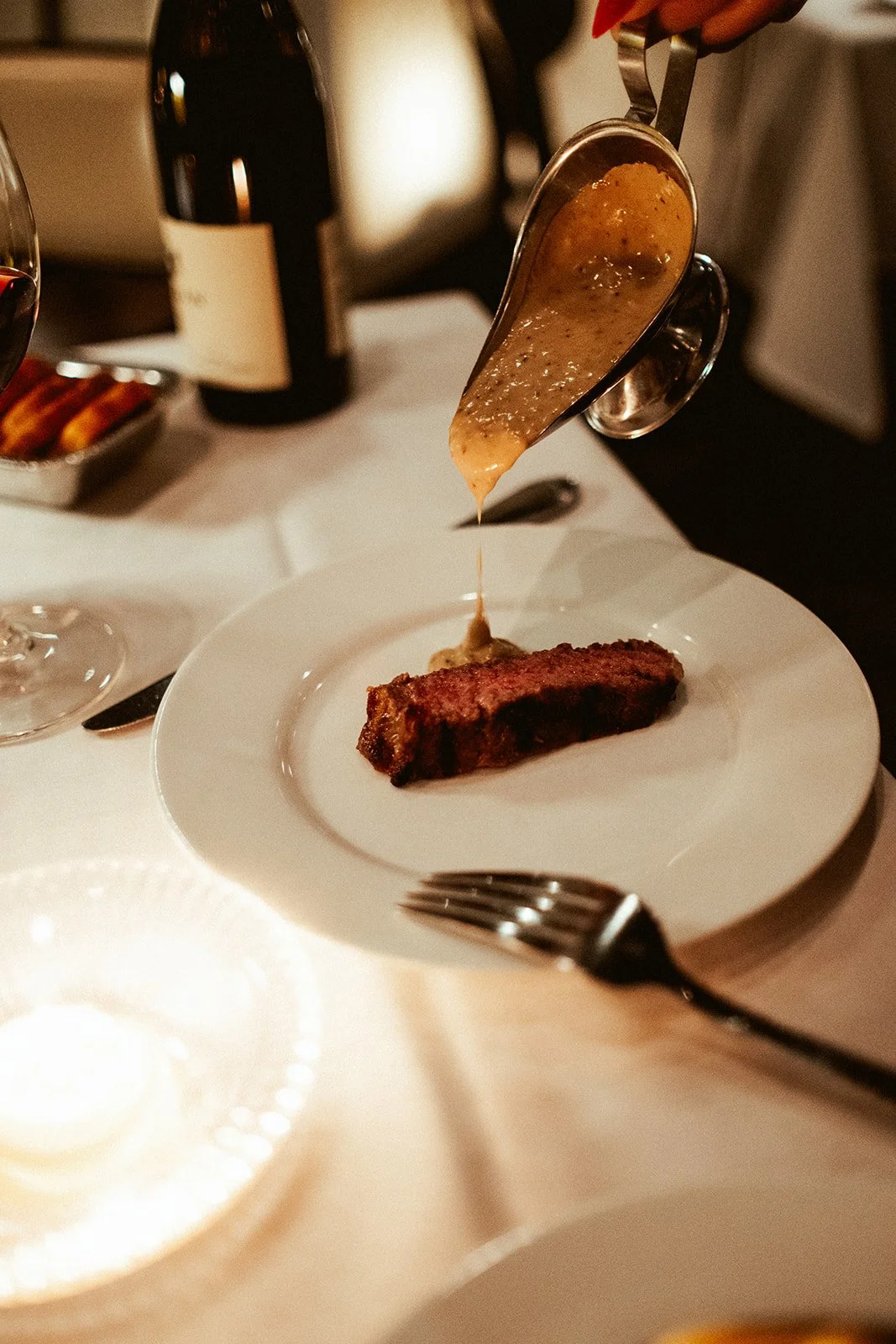
Sauce Au Poivre
serves 4
You can find green peppercorns in brine at specialty grocery stores. They usually come in a small can or jar. If you can’t find them, begin making the sauce by toasting very coarsely cracked black pepper before adding the shallot.
Shopping List —
48g shallots, minced
240g chicken stock
132g cognac
360g heavy cream
12g soy sauce
15g green peppercorns in brine, or to taste
Equipment —
saucepan
Steps —
In a saucepan over medium heat, add a small amount of neutral oil. Add the shallots and sweat until soft and translucent.
Increase the heat to medium-high, add the cognac, and reduce au sec.
Add the vinegar and reduce by half.
Add the chicken stock and reduce by half.
Add the heavy cream. Reduce on medium heat until it just coats the back of a spoon, about 20-30 minutes. Stir occasionally.
Finely chop the green peppercorns and add it to the sauce. Season with soy sauce, a splash of vinegar if needed, and salt to taste. Add more peppercorns or coarsely cracked black pepper if you prefer your sauce with a little more kick.